Wednesday, December 15, 2010

Los Meurtos to the Lorenzo Channel and Isla Espiritu Santo - December 5

Up at dawn the next morning, we crept out of the bay with Chirpy and Silas Crosby in quiet seas and little wind. I was nervous this passage because we had been told that when the wind builds it could be impossible to get through. The island of Cerralvo parallels the East Cape of the Baja which forms a north-south channel that can funnel wind and waves to an alarming degree. The predictions for that day were good, but we wanted to make sure we got through before the diurnal day winds began. As it turned out, there was little to fear.
Even made a hot lunch under way!

As we entered the channel the winds picked up enough to sail for a little while. It was a relief to have a little respite from the engine noise. However, the wind was fickle and as we moved along it changed direction to right on the nose. When a large ship came up behind us we decided to start the motor again. As we approached the Lorenzo Channel, which separates the peninsula north of La Paz from the island of Espiritu Santo, we were able to change our course enough to fly the sails again. The wind picked up to 15 knots and we had a spirited, engine-less sail into this narrow passage. However, just as we were abeam the channel markers the wind completely died. One minute we were bombing along and, literally, the next moment the sails were flapping. We quickly started the engine, stowed the sails and continued through, following Silas Crosby north toward Bahai San Gabriel. Chirpy turned south and joined Thor, who had left Los Meurtes in the middle of the night, in La Paz.

Isla Espiritu Santo from the Lorenzo Channel

When we got to the other side of the Lorenzo Channel it was like entering another world. The seas were flat, a gentle breeze was blowing, it was warmer and the landscape became more inviting.

Ensenada de la Dispensa - first cove on Isla Espiritu Santo

Espiritu Santo starts to reveal its "bones" at Punta Colorada

We rounded the southern extent of Isla Espiritu Santo (the Holy Spirit) and dropped our anchor beside Silas Crosby in 4 meters of water (yes, 4), 30 meters of chain, in tranquil, opalescent jade green water on a white sand bottom. We were about to begin four of the best days of our trip to date.

Bahia San Gabriel - God's Swimming Pool

Los Meurtos - December 4

The next day was much the same as the previous one and has pretty much blurred itself in my mind. We motor sailed the whole day in fairly benign seas and we had less wind. Although we passed through the area of the famous Pulmo Reef - the only hard coral reef found in the Sea of Cortez and in a nature preserve - we didn’t actually see any of it. We also did not see any wildlife that day. Doug read for most of it and I watched the empty landscape as we sailed by, lulled into a kind of passive complacency by the sound of the engine, the warmth of the sun and the repetitiveness of the journey.

a Kindle is a great way to pass the time on an uneventful passage

I did get a good shot of Chirpy, with Paul, Laura and Jennifer aboard, along the way.

Chirpy, a steel hulled sailboat from Deep Bay, Vancouver Island


Thor with Mark and Lori aboard - East Cape in the background

We arrived at Los Meurtos, 46 miles later, at about 3pm. There were quite a few boats at this anchorage as, not only is it a cubby hole for sailors continuing on to La Paz, it is also the primary jumping off point for those crossing to Mazatlan and Puerto Vallarta. However, the water and the wind in the bay were very quiet and we were able to take a secure anchorage right in front of the white sandy beach.

Los Meurtos

At Los Meurtos a paved road leads to La Paz and, as a result, it has more “civilization”. To the left of the beach is some kind of resort with a huge golf course spread out behind it. It looked very bizarre to me, shimmering emerald green grass, in a land with very little water and surrounded by such dry and barren surroundings.

Los Meurtos in the haze of late afternoon

To the right of the beach was a little palapa that served simple meals and cervesa. A little beyond that was a very interesting “folly” that looked like something out of a Disney movie.

Someone's folly

The ensenada (or cove) is called “Los Meurtos” (the dead) not because it was a place of death, but because of the moorings that were used to hold the barges and ships that supplied the now defunct silver mines and transported salt produced nearby. These moorings were made with giant anchors buried in the sand and ore carts from the mines which were referred to as “dead men”. However, because of the implication of the name on the sensitivities of the people who are developing this area, there is a push to rename it “Bay of Dreams”. For us, it was a bay of dreams, as we were early to bed and slept well.

Oh - and time for a shower - I'll leave you to decide what the caption really should read!

Bahia Los Frailes - December 3

If you look at a map of the Baja, you will notice that Cabo San Lucas and San Jose are at the extreme bottom. As you travel to Bahia Los Frailes, you turn north again, rounding the East Cape and heading into the Sea of Cortez. In the winter time, the strong prevailing winds come from the north, and we took full advantage of them as we travelled down the Pacific side of the Baja. However, now we found ourselves in the position of having to battle them to continue our journey to La Paz.

Although Pacific swells are not encountered on the east side, the wind waves do build up as they follow the wind down the 600 miles of the Sea of Cortez. Additionally, there is a cross-current – mixing the aquamarine waters of the Pacific with the Sea of Cortez, making for great fishing, but lousy transiting. In a condition where strong wind, wave and current are present, square seas can present themselves – making it next to impossible for a small boat to get north. As a result of all these factors, sailors pay very close attention to the weather and take advantage of the lulls to get to their destinations as quickly as possible. No leisurely sails are adviseable.


A window had just opened for us. We left San Jose del Cabo in flat seas and no wind, but as we made our way to Los Frailes with Thor, the wind piped up on our nose and we experienced some of the slop these conditions can cause –  wind on the nose, with short, choppy seas coming from different directions. We had our mainsail up to stabilize us as best as possible, but still we were tossed about as the boat worked to keep up 5 knots of speed. But the sun was shining, it was warm, and the spectacular, craggy coastline kept my attention as we jostled by. We arrived at Bahia Los Frailes, 28 miles north of San Jose del Cabo, just before the afternoon winds began in earnest, and dropped the anchor in turquoise clear water, 10 meters deep, with 50 meters of chain for secure holding.


Los Frailes - you can just see the RVs behind the beach

Los Frailes (the Friars), is a lonely place. There is an old dirt road running along the coast that connects San Jose to La Paz and little fishing villages and palatial mansions (!) can be found along it. At Los Frailes we found a rustic RV park, pangas and fishermen. The whole bay is lined by white sand beach and in one corner we could see where dinghies could easily come ashore.


dinghy landing

There were several cruising sail and powerboats anchored behind the lee of the jutting headland which gave small protection to the choppy waves trying to wrap around it. The afternoon wind gusts blew down on us from one side, then the next, causing Ka’sala to “dance” on her anchor. I was reminded of yet another difference between the perceived “Cruising World moment” and the reality of never really being in control, at the whim of the weather and waves, always on tenderhooks, worrying that your anchor will drag. Later in the afternoon we did lift our anchor and move closer to the headland which sheltered us enough to slow the pace of the dance.

Silas Crosby arrived soon after we did. Meredith was not aboard as she had moved to Taking Flight in Cabo to hitch a ride to Puerto Vallarta where she would meet up with her mom and sister for the Christmas holidays. Steve and John were happy to be out of hectic Cabo.

Silas Crosby at Bahia Los Frailes

Doug launched the dinghy to touch base with them and to scrub off the green beard Ka’sala had accumulated on her hull. I pulled out our new “dongle”, but couldn’t get any coverage.


cleaning the "green beard" off Ka'sala

That night, as we were tidying up the decks before bed, Doug noticed an eerie sight. What he thought were stars reflected in the water, were actually the eyes of a thousand fish. As we turned the small flashlight on them their eyes glowed florescent orange as their foot-long, green bodies writhed together to get closer to the light. Doug went down below to get the big beam flashlight, but when he shone it on them, they disappeared, to reappear with the smaller light. Ugh. Only a thin fiberglass hull between us! I thought of their densely packed bodies, inches away from me, as I fell asleep that night.


Rugged Bahia Los Frailes

Sunday, December 12, 2010

San Jose del Cabo

I was very curious to see how the landscape unfolded on the sail from Cabo San Lucas to San Jose del Cabo as I had been to the latter for Christmas in 1997. Doug was still flying for Cathay Pacific and, as was his habit, he had generously offered to take a shift over Christmas to allow another pilot with children to be home with his family. I could not stand the thought of another rainy Christmas in Comox alone, so booked a holiday in San Jose with the hope that Doug might be able to make the easy connection if he came home through Los Angeles. Unfortunately, that was not to be, so I spent the week exploring the area by myself.

Mexican fish boat along the way

One of the things I did was catch a local bus into Cabo San Lucas for the day. Even in 1997 I found it a noisy, unappealing place and left right after lunch. On the way back I got off the bus at a road leading to a little cove where I did some snorkeling on a small reef. In those days, the road to Cabo was practically empty of houses, resorts and condos. The little bay I visited had an abandoned villa at one end of the beach, rustic palapas where you could get a cold drink, and that was about it. I was amazed at what I saw as we cruised by on Ka’sala in 2010! Almost the entire strip of highway between the two towns has been developed. The little cove now has a massive resort and condo complex on it.

new resort at the "little" cove - Palmilla

The whole area was unrecognizable to me. However, as we got closer to the town of San Jose, I could see more familiar territory.

San Jose shoreline

The new marina that is being built on the other side of the estuary at La Playa is in an area that once was the town’s soccer fields.

La Playa at San Jose

The basin is in, and about two thirds of the docks are installed, though some do not have power and water.

Distinctive cross overlooks the marina

Most of the yachts at the marina are huge powerboats waiting to fish the famous Gordo Banks

 While we stayed there we could see many workers landscaping and beautifying, and also divers doing some underwater work.

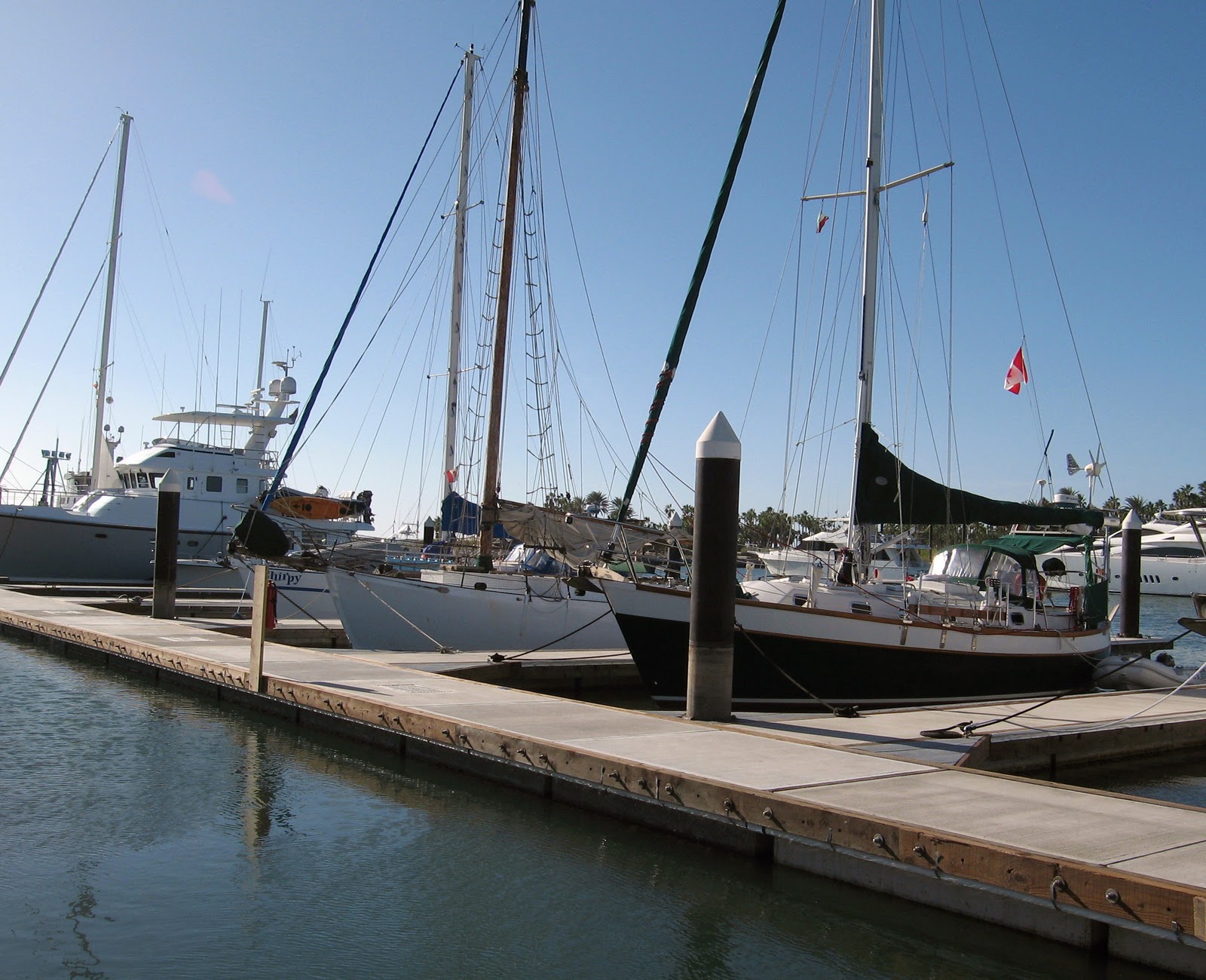
Ka'sala at Puerto Los Cabos Marina

It seemed to me that the building was going slowly, but what a magnificent place it will be when it is complete! The yacht basin is surrounded by a landscape of various succulent cacti, bougainvillea and other flowering desert shrubs.

Boulevard with art walk


Sculpture along the boulevard


Marina office

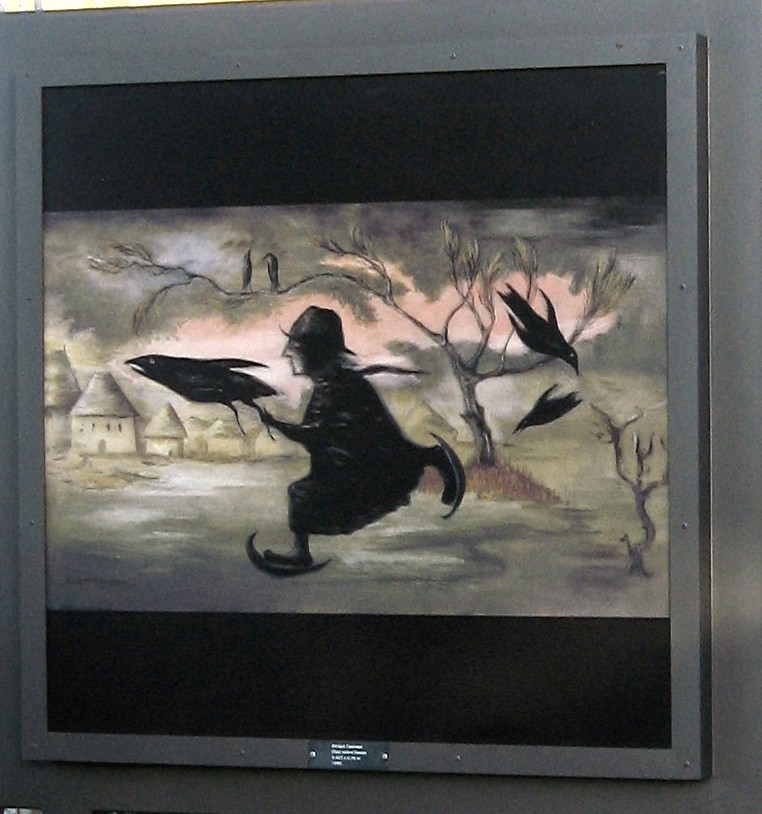
A boulevard lined with artwork and sculpture, (the works of surrealist Leonora Carrington while we were there) and fringed with palm trees swishing in the breezes, leads the way to the marina office.


Surreal artwork by Leonora Carrington

As you enter the marina, there are two lovely little deserted white sand beaches between the inner and outer breakwaters. I was enchanted.


Deserted beach at sunrise

San Jose has a history of being a refuge. When the Spanish first came to the area in the 16th century, they found fresh water in the estuary and so later developed it as an important staging point for their Manila trade. The stout little galleons would load up with water before heading out into the Pacific with their trade goods. They must have been overjoyed to return there, with their great loads of gold and porcelain. Because of the abundance of fresh water, San Jose is very green and lush – a very welcome sight even for the modern day traveler - after the barren, dry and rock-strewn rest of the Baja! Ironically, and not the least bit surprising, even in those days Cabo San Lucas had an evil reputation as English pirates hid in the rocky bays to prey on these vulnerable ships.

When we arrived at the San Jose we were delighted to find Chirpy there. As I have mentioned before in this blog, Paul and Laura are from Deep Bay, just a few miles south of Comox. They gave us all the details of the place, drove us to the lavanderia in their rented car, offered to take us to Costco with them and lent us their bicycles. We sincerely appreciated their generosity.

We discovered that the marina was a 20+ minute walk into town and not the least bit convenient for provisioning.

Road entrance to the marina, lovely cactus gardens in the background

There was a small tienda nearby where I was able to buy some beer and cilantro, though they did have a small supply of other things. Nearby were a couple small cantinas. One night we went to Tommy Barefoots for dinner, joined by the crews of Blue Rodeo, Cloudy Bay and Chirpy, but were not impressed. If we wanted to have a good dinner out, we would have to walk into town.

On our first day, after dropping off our laundry, we headed to the outskirts of town to find the Soriana to reprovision with the idea of returning in a taxi. We never did find it and were quite tired walking on the busy highway with a dusty, narrow shoulders. However, we did come across a TelCel store and, on the recommendation of Paul from Chirpy and others along the way, bought an internet “dongle”. This device, which looks a lot like a USB memory key, connects to the Mexican cell phone system to provide the user with internet access. It cost $60 US to buy, then $40 US a month for 3 GB of time. There was a promotion on at the time that gave us our first month for free. We were incredibly impressed with the service we received. The Mexicans working in this store had reasonable English and were very eager to practice it with us. It was funny to hear us trying to use Spanish and them trying to use English.

Unfortunately, one very important bit of information did get missed in this fractured dialogue. We didn’t realize that we needed to “activate” the dongle as soon as we used it on our computer. The device allowed a little bit of free internet time to activate, but we used it to check our email. It stopped working and we didn’t know why. That meant, the next day we had to walk all the way back out to the TelCel store to find the answer. Once again, through broken communication, we discovered that the only way to fix it was to walk down the road to the customer service centre and pay another 30 pesos to reactivate the activation. The process was to use a cell phone to send an activation text message to TelCel. We didn’t have a cell phone that worked in Mexico. The messaging was all in Spanish. But there is a good part. Everyone we encountered did their utmost best to explain the situation and help us find the solution. We had customers waiting in line translating for us and employees trying hard to set us up so we would have no further problems. It was great – and – the dongle has worked ever since. (It is slow when there is limited cellphone coverage – but blisteringly fast where there is making for great Skyping).

After all this walking and talking, we really needed to have some beer. Don’t you agree? Well, guess what? The only micro brewery in the Baja is in San Jose!


Do you think there is any significance in this icon?

So we literally marched, well, ran, to the brewery from the TelCel to check out what they had to offer. This smartly decorated place, with a great outdoor eating area, had 7 brews on tap.


What a selection!

 Doug tried the Peliroja Red and I indulged in Escorpion Negro.


Wow! Deep, rich, satisfying, wonderful! We also had a fabulous lunch of grilled vegetable Panini and grilled beef over spinach salad. Heaven!

The day before we had discovered that San Jose also has a French baker! Within minutes of walking into the town we were seated in the French Riviera surrounded by every kind of French treat you would expect to find in an authentic patisserie.


French Riviera

We indulged in croissants that Doug said were “better than anything he had tasted since Paris” and, for those of you who know Doug, you will know that this was a great compliment.


Lattes and croissants in French patisseries on the Baja don’t come cheap, however, and is indicative of just how “well-heeled” the town of San Jose is. In little streets radiating around the town square you will find exquisite cafes and restaurants in incredibly beautiful settings such as old colonial-style houses painted in warm Mexican adobe colours, wrapped in blooming bougainvillea and enclosed with gorgeous ironwork grills and doors.

Lovely restaurant


Boutique hotel


Secret courtyard

Many floors are mosaics of colourful tiles with walls covered in artwork. The beauty spills out into the street and, as you wander along, you encounter one art gallery after another. In fact, on Thursday nights it is a tradition to enjoy the candlelit Art Walk.

It wasn’t difficult to fantasize about living in San Jose. I found it was essentially the same as it had been when I visited 12 years before, but more developed and more refined. It would be a genteel existence, but you would need to have the capital to go with it. And we were curious. Where were the Mexicans? Yes, we had seen some very wealthy Mexicans in our wanderings, but where did the locals shop and conduct their lives? I had noticed on a map there was a market, so we headed off in that direction. As we left the ornate and gilded streets behind, we started to see the other side of San Jose. Children, schools, busy families, little shops and tiendas lined the streets. We eventually found department stores and several outside cantinas. At lunchtime we passed El Fogon and couldn’t pass it by.


El Fogon consisted of a large outdoor kitchen and about 20 plastic tables and chairs. The walls were open to the air and the roof was ventilated with palapas. We were the only gringos there and only Spanish was written and read, but we managed to ascertain that their speciality was a swarma-like, slowly roasted spiced meat on a stick served in small soft corn tortillas. To say it was delicious is a total understatement!


 Pastor

We could have these little pieces of heaven 8 different ways. Between us we sampled 3 – one was called “gringas” another “vampira” and another “anchurra”. The waiter, after bringing us freezing cold cervesas, also delivered a platter with little dishes of raw onions, fresh chilis, salsa, cucumber, limon, guacamole, finely shredded cabbage and two different chili-type sauces. The meat, called pastor - a type of pork - came heaped up on the tortillas and we added what we wanted from the platter. The only trouble was there was no cutlery and I fumbled my food very badly, though managed not to leave a crumb by the time we were finished.

You get the idea - messy

I looked around at the Mexicans in the cantina to see how they fared without utensils and was astonished at their skill – kind of the equivalent of eating Chinese food with chopsticks. I guess you have to be born with a tortilla in your hand to do it right! I watched one very small man eat about 14 heaped tortillas, one after the other, without losing or smearing a single bit. I have never seen such an appetite, but could certainly understand it! I saw a very well dressed lady, with rings on her fingers, daintily eating her tortillas with pinky finger extended. Again – no mess. Hmmmmmmm. There is much to learn! Our whole lunch cost us approximately $12 US dollars. I am ashamed to say that I was so taken with my appetite and the whole cultural experience I did not take a single picture and had to borrow these ones from Google Images – even when we returned the next night with Mark and Lori from Thor. Mea Culpa!


Mark and Doug on the way to El Fogon

We did, eventually, do our provisioning at the Mega near the Hotel Zone. We found most everything we needed for the week we planned to take to get to La Paz. We took a taxi to get it all back to the boat and that cost $15 US dollars – not cheap. We picked up our laundry the next day and the cab ride back cost $10 US dollars.

Even the lavandaria was beautiful!

At the dock we did a thorough clean of the boat. Poor Ka’sala was absolutely crusty with salt and grit after her month without fresh water and we were very pleased to have her sparkling again. We also filled our water tanks – adding a couple tablespoons of bleach to each tank just in case. I was amazed to find we had almost half our water supply still available, and realized we didn’t have to be as frugal as we thought! I had really hated doing the dishes in salt water.


Early fishermen in local panga

Our time at San Jose had come to an end - time to find that perfect deserted bay with the white sand and warm water. We had been listening carefully to the weather, because we knew that rounding the East Cape could be very difficult, if not impossible, when the north wind and sea state kicked up. Additionally, we were looking forward to seeing Silas Crosby who had just left Cabo San Lucas. A window appeared and, at day break, we cast off the lines and, with Thor, headed out to sea for our 40 mile journey to Los Frailes.

Thor leaving Puerto los Cabos - an early morning departure

Cabo San Lucas

Now I know what cruisers mean when they say “get in and out of Cabo as fast as you can”. It’s no place to spend much time by boat unless you are very rich and love sports fishing. After spending the last three plus weeks working our way down the Baja, we were well ready for showers, laundry, provisioning and a touch of civilization. Well, you get it in spades at Cabo!

We woke up the morning after we arrived to discover a gorgeous place. See through, turquoise waters, spectacular geological formations lining the bay, azure skies, calm waters – we thought we might be in heaven.

Land's End - Cabo San Lucas

Not for long! First, we were greeted by the “harbor patrol” who told us we had to pay 133 pesos a day to anchor. We could pay them if we didn’t want a receipt, or report to the Harbour Master’s office on Monday if we did. Hmmmmmm. Sounded like graft, so we elected for the office, but the angst associated with trying to do the right thing without being ripped off gnawed at us and set the tone for the rest of the day.

Just after breakfast the jet skis began. We counted over 20 on the beach and the tourists who were using them must have decided to do loops around Ka’sala for fun. The constant traffic of glass-bottomed pangas giving gringos the guided tour, combined with several para-sailing speed boats, made for extreme wave action about the boat and we bounced around like we were on a trampoline. The microphones from the resorts kept blasting all the activities that could be enjoyed, as well as up-tempo, grate-on-your-nerves happy music and a constant stream of incredibly expensive fishing yachts making their way to the Gordo Banks, had us pretty irritated, to say the least. We couldn’t even speak to each other without yelling. We decided to leave the chaos and head into town. You can just imagine the difficulty we had getting the dinghy in the water and the motor on it – horrible – though we found out later we could have taken a panga “water taxi” for “tips”.

Ka'sala at anchor in Cabo - notice para-sail in background

Once through the breakwater, we checked out the two marinas. Both had limited space available for a 34 foot sailboat, but the nightly rate was $120.00 US dollars! Gulp!

Cabo Lucas marina

We continued on to the dinghy dock where a security man took $3.00 US to guard our little tender.

dinghy dock - Ka'sala's tender is second from the right

The waterfront is very elegant with expensive hotels and condos, as well as a surreal shopping complex selling high end designer everything.


One block past this is more chaos. Heavy traffic, little bars and restaurants, and touts trying to sell you everything under the sun from cigars to scuba trips to banned substances. Dust, grime, garbage, and garish colours greeted us. It was hot. We were tired and thirsty. We were cranky.

We found a little cantina with a shaded terrace that served us a relatively expensive, mediocre lunch of tasteless fish, smothered in sauce with mashed potatoes on the side. However, the Pacifica Clara and a very delicious spicy broth, which we were given when we sat down, soothed our stretched nerves at least a bit.


 Culture shock, after the isolation of the Pacific Baja, and the unbelievable dichotomy between rich and poor, gringo and Mexican was really unpleasant. We returned to little Ka’sala in the late afternoon – the beach activities had quieted down and there was a welcome lull before the discos started up for the evening.

Luckily this noise also ended relatively early and we were delighted to have a calm and quiet night. The next day we stuck pretty close to the boat and endured the aggravation by reading books. After all, it was still warm and we were very tired after our spirited sail to get to Cabo. On the second day, there was a good wind up, with some choppy waves, so the beach activities were more subdued. As Doug sat in the cockpit, nose pressed to his Kindle, he couldn’t help but notice a young couple on boogie boards heading out to sea. The woman was obviously in a panic, and her partner was unable to help her. Doug launched the dinghy to go to help, but a jet ski assisted the woman before he got there, leaving her partner to fend for himself. Doug ended up towing him to shore. No sooner was he back on the boat, when he looked out to see a teenage boy thrown from the jet-ski he was on! The Mexican lads who rent the skis came to his rescue quite quickly. What a place!

That day we saw Thor, Blue Rodeo and Cloudy Bay, the boats we had left behind at Bahai de Magdelena, arrive at Cabo. We discovered they had a much more pleasant passage than us, but windy nonetheless. We decided we had enough of Cabo and decided to continue on to San Jose del Cabo. Through email with the marina there, which was still under construction, we discovered we could rent a slip without power or internet for $40.00 a night. We felt this was still a lot of money, but we were so in need of a quiet rest, we booked three nights. We raised our anchor at first light and motor-sailed the 17 miles in light winds to get there around lunch time.

Good bye to Cabo San Lucas!